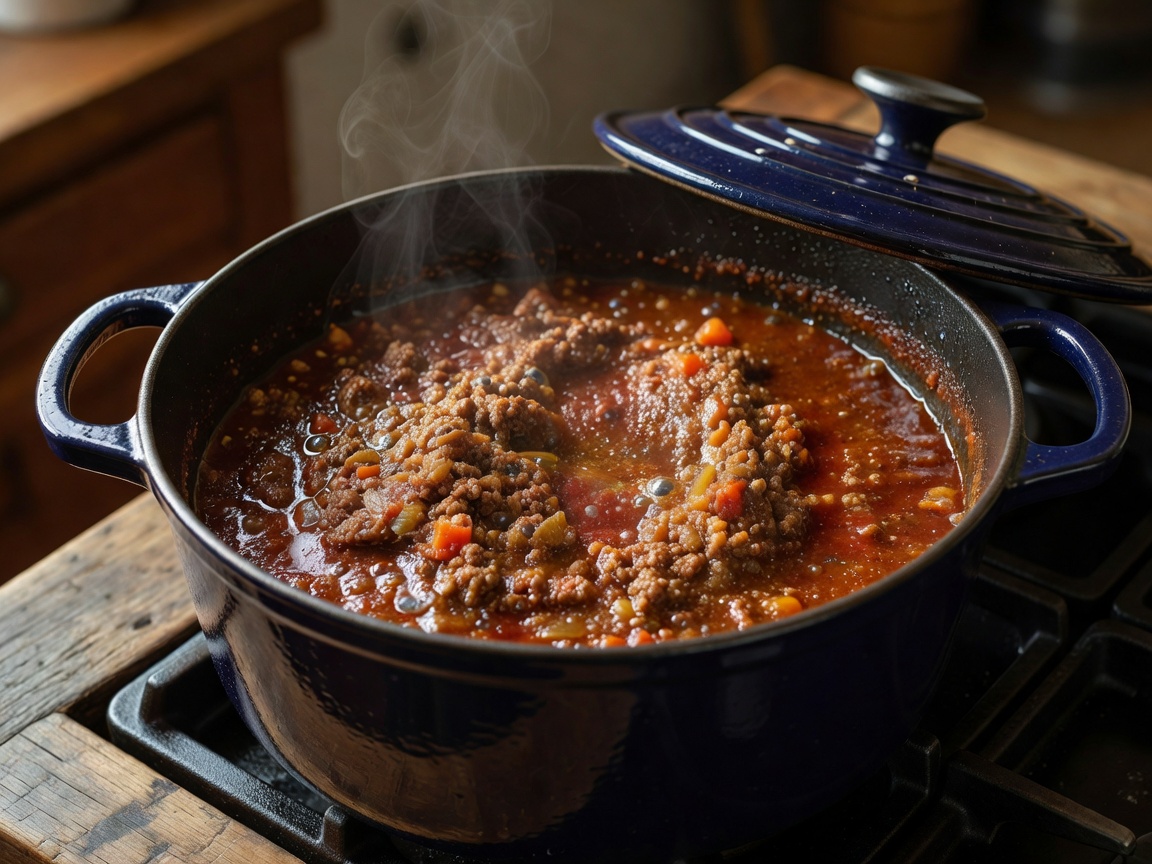
The Official Formula and Cut Selection
In international cooking, the term "Bolognese" is frequently misused to describe marinara sauce cooked with lean minced meat. In Bologna, however, the recipe registered by the Accademia Italiana della Cucina with the Bologna Chamber of Commerce specifies a precise meat matrix. The traditional beef cut is the cartella (the thin skirt or diaphragm muscle), an active working muscle loaded with intramuscular connective tissue and deep, iron-rich flavour.
When skirt steak is unavailable, a well-marbled chuck roast ground through a coarse 6mm or 8mm plate serves as an ideal technical alternative. Extremely lean ground beef (such as 90/10 or sirloin) is strictly avoided; without sufficient intramuscular collagen, the meat dries out and turns pebbly during the mandatory four-hour simmer.
The Role of Fat and the Tri-Color Soffritto
The cooking begins with rendering pancetta arrotolata (cured Italian pork belly, unsmoked). Smoked bacon is excluded because wood smoke compounds overpower the delicate interplay of simmered milk and sweet mirepoix. Once the pork fat has melted in an enameled Dutch oven, the soffritto is introduced.
The soffritto consists of equal parts by weight of yellow onion, carrot, and celery stalks, diced finely into a 2mm brunoise. The purpose of this micro-cut is structural: during the prolonged simmer, the vegetable cellular walls break down completely, dissolving into the braising liquid to provide natural sweetness, glutamic acid, and thickness without requiring added starch.
Technical Precision: Milk Timing and Acid Protection
Traditionalists apply whole cow’s milk at two critical stages. Adding whole milk immediately after the wine has evaporated—and before introducing tomato paste—protects the delicate beef fibers from hardening in acidic tomato concentrates. The lactic acid and butterfat coat the meat proteins, softening connective tissues and resulting in a tender mouthfeel.
Step-by-Step Browning and Deglazing Process
Follow this disciplined progression to develop Maillard reactions without burning the delicate soffritto aromatics:
- Render the Pork Fat: Place minced unsmoked pancetta in a heavy-bottomed enameled cast iron Dutch oven over low heat. Let the fat liquefy slowly over 8 to 10 minutes until the bits turn golden.
- Sweat the Soffritto: Add the minced onion, celery, and carrot. Cook over medium-low heat for 12 minutes until translucent. Do not allow the onion edges to brown or caramelize deeply.
- Brown the Coarse Beef: Increase heat to medium. Add the coarsely ground beef chuck. Break it apart with a flat wooden spatula. Sauté until the red color disappears and water releases and evaporates, leaving clear sizzling rendered fat.
- Deglaze with Dry Wine: Pour in a crisp Italian dry white wine (Trebbiano or Albana). Use the wooden spatula to dislodge the caramelized proteins from the pan bottom. Maintain heat until the sharp alcohol scent evaporates completely (approx. 4–5 minutes).
- Temper with Whole Milk: Pour in whole pasteurized milk. Lower heat to medium-low and let the milk simmer into the meat until the pan returns to rendered fat and the liquid has vanished.
- Introduce Tomato Concentrate: Dissolve double-concentrated tomato paste (doppio concentrato) in a cup of gentle beef or vegetable stock. Stir thoroughly into the meat.
- The 4-Hour Gentle Braise: Adjust burner to lowest flame or set in a 110°C (230°F) oven. Cover partially with a tilted lid. Allow one gentle bubble every few seconds for 3.5 to 4.5 hours, adding splashes of warm broth or water whenever the surface appears dry.
Ragù Ingredient Specifications Table
| Component | Quantity (6–8 Servings) | Function in Lasagne | Accepted Substitution |
|---|---|---|---|
| Beef Chuck / Skirt (Cartella) | 600 g (Coarse Grind) | Provides deep iron, gelatin, and savory body | Boneless beef shank or brisket |
| Pancetta Dolce (Unsmoked) | 150 g (Finely Minced) | Supplies silky pork fat and mild curing salt | Uncured pork fatback (lardo) |
| Soffritto (Onion, Celery, Carrot) | 60 g each (180 g total) | Foundation aromatics; dissolves for body | Strictly equal parts; do not omit celery |
| Dry Italian White Wine | 150 ml (Albana / Trebbiano) | Acidic balance to cut rich saturated fats | Dry Italian red wine (Sangiovese) |
| Whole Cow's Milk | 250 ml | Tenderizes beef fibers, balances acid | Unsweetened full-fat oat milk (alternative) |
| Tomato Paste (Concentrato) | 50 g (Double Concentrate) | Adds glutamates and subtle color without soupiness | Strained crushed San Marzano tomatoes (max 200g) |
Common Searing & Simmering Pitfalls
Review these common mistakes before starting your prep:
Correct Technique
- Grinding meat through a coarse 6mm to 8mm plate to preserve distinct bite.
- Simmering at low temperatures (85°C–90°C) to gently dissolve collagen into gelatin.
- Keeping tomato quantity strictly secondary to the braised meat texture.
- Resting the finished ragù in the refrigerator overnight to allow lipid flavor compounds to harmonize.
Common Mistakes
- Using ultra-lean 5% fat minced meat, creating grainy, dry pellets.
- Adding garlic, oregano, basil, or rosemary (foreign to classical Bolognese ragù).
- Dumping in multiple cans of watery tomato sauce, producing a watery, acidic soup.
- Boiling vigorously over high heat, which breaks the emulsion and toughens the meat proteins.
Once your ragù finishes its multi-hour simmer, allow it to cool to room temperature before assembling your lasagne. Warm or boiling ragù softens raw pasta sheets prematurely, releasing excess starch and ruining your layered strata.