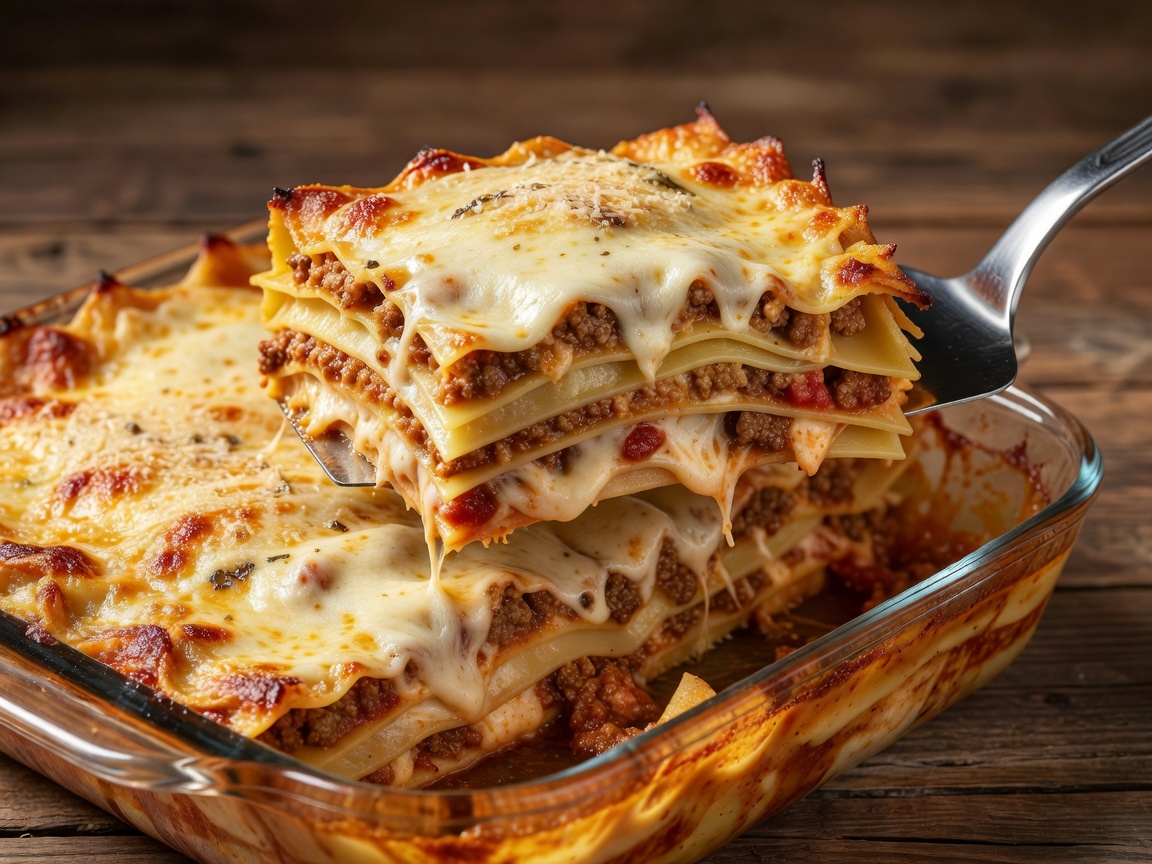
Oven Thermodynamics: Static vs. Convection Heat
When baking Lasagne al Forno, select a traditional static (conventional) oven setting over convection (fan-forced). Fan-forced heat circulates dry air at high speeds, which can evaporate surface moisture too quickly and bake the top layer into a tough, leathery crust before the interior layers are fully heated.
A static oven set to 180°C (350°F) transfers heat steadily through radiant waves. This allows the internal sauces to gently simmer together and cook the pasta sheets uniformly from the bottom up.
The Two-Stage Baking Technique
To achieve a creamy interior paired with a crisp gratin crust, use a two-phase baking schedule:
- Phase One (Trapping Steam): Tent the baking dish loosely with aluminum foil, ensuring the foil arches upward so it doesn't stick to the delicate top layer of Parmigiano Reggiano. Bake covered for 25 minutes. This traps steam from the béchamel and ragù, cooking the fresh pasta sheets through to their core.
- Phase Two (Developing the Gratin Crust): Remove the foil and return the dish to the oven for another 15 to 20 minutes. As excess surface moisture evaporates, the milk proteins in the balsamella and the butterfat in the Parmigiano Reggiano caramelize, creating blistered, golden-brown crust (the beloved crosticina).
The Science of the Rest: Starch Retrogradation
Cutting into a lasagne straight out of the oven is a common pitfall. At boiling temperatures (around 95°C–100°C), the starches in the béchamel and the fats in the ragù are still liquid. Slicing immediately causes the filling to run into the empty spaces in the dish, leaving you with collapsed pasta sheets. Letting the dish rest for 25 to 30 minutes allows starches to firm up and fats to cool slightly, ensuring clean, sliceable squares that hold their shape on the plate.
Temperature Stages: From Oven to Plate
| Phase | Core Temp | Internal Condition | Culinary Recommendation |
|---|---|---|---|
| Fresh from Oven | 92°C–96°C | Sauces are boiling; fats are fully liquefied | Do not slice. Set pan on a wire cooling rack. |
| 15 Minutes Rest | 80°C–84°C | Steam subsides; béchamel begins to thicken | Edges firm up; core remains slightly too soft to cut cleanly. |
| 25–30 Minutes Rest | 68°C–72°C | Starches set completely; fats stabilize | Ideal slicing window. Distinct layers, warm mouthfeel. |
| Refrigerated Overnight | 3°C–4°C | Solid block; gelled structure | Perfect for pre-portioning cold, then reheating gently at 160°C. |
Slicing and Plating Technique
When you're ready to serve, use a long, sharp chef's knife or a serrated utility blade rather than a dull spatula. Cut straight downward with a single, smooth stroke rather than a sawing motion to keep the top gratin crust neat and intact.
Slide a flexible, wide offset metal spatula underneath the bottom pasta layer, lift the portion supporting the base firmly, and transfer it to a warmed ceramic dinner plate. Pair with a glass of crisp Lambrusco di Sorbara or structured Sangiovese di Romagna to cut through the rich meat ragù and velvety béchamel.
Common Baking and Serving Mistakes
Master Practices
- Positioning the dish in the middle third of the oven for balanced radiant heating.
- Letting the dish rest for at least 25 minutes on a raised wire cooling rack before slicing.
- Serving on warmed plates to keep the delicate butterfat from cooling too quickly during the meal.
- Reheating leftover portions covered in a 160°C (320°F) oven with a light splash of milk.
Common Mistakes
- Using high broiler heat to rush the top crust, burning the cheese before the center cooks through.
- Cutting into the dish immediately after baking, causing the filling to spill across the pan.
- Reheating slices in a microwave, which dries out the pasta sheets and turns fats greasy.
- Leaving the baking dish in a drafty spot, which cools the outer edges while leaving the center hot.
Mastering Lasagne al Forno requires patience at every step. From the slow, four-hour simmer of the ragù to the mandatory thirty-minute rest after baking, deliberate timing and care reward you with an extraordinary Italian dining experience.